Emergency Guides2025-08-106 min readYourVision 3D Operations Team
What to Do Immediately When a Hurricane or Tropical Storm Causes Severe Yard Flooding in FL
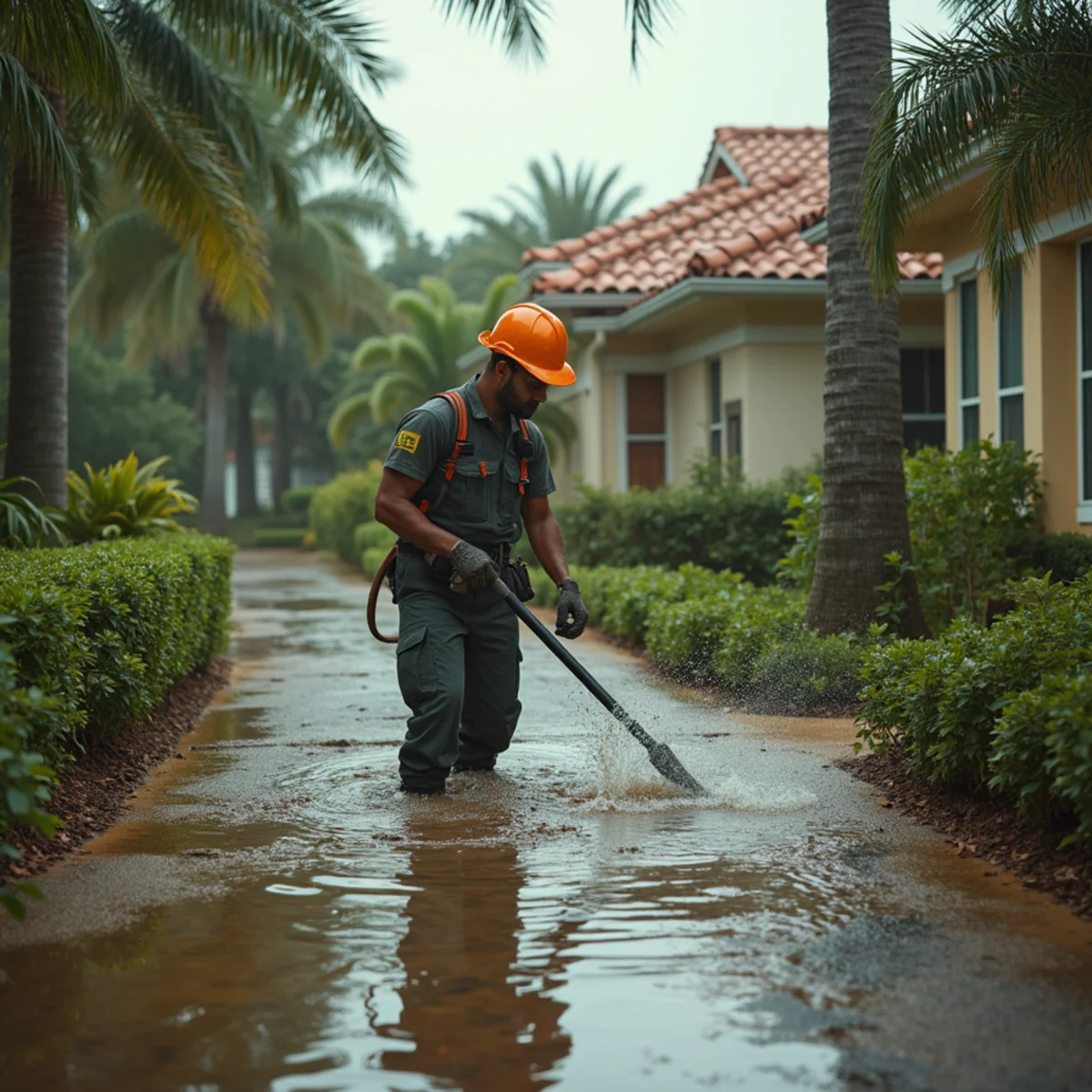
When a tropical depression or hurricane unloads 6+ inches of rain across Central Florida, poorly drained yards quickly become swampy lakes threatening home foundation slabs. Here is your emergency action guide to protecting your home and recovering fast.
Direct Answer & Florida Contractor Takeaway
The Fast Answer for Central Florida Property Owners
Direct Summary: In Central Florida's humid subtropical climate (USDA Hardiness Zone 9b/10a), effective landscape longevity, storm resiliency, and property value protection demand proactive horticultural planning, precision grading, and moisture management. Whether remediating torrential stormwater, selecting Florida-Friendly turf, or installing architectural pavers over sandy scrub, solutions must comply with local Osceola and Orange County building codes and UF/IFAS guidelines to prevent costly rework.
UF/IFAS Florida-Friendly principles verified
DBPR licensed & insured installation standards
Osceola & Orange County HOA code compliance
Engineered for hurricane-season wind and deluges
In This Architectural Guide
1.Step 1: Protect Electrical Panels and Foundation Weep Screeds
2.Step 2: Clear Clogged Swales and Stormwater Outlets
3.Step 3: Deploy Emergency Pumping Equipment
4.Step 4: Transition to Permanent French Drain Engineering
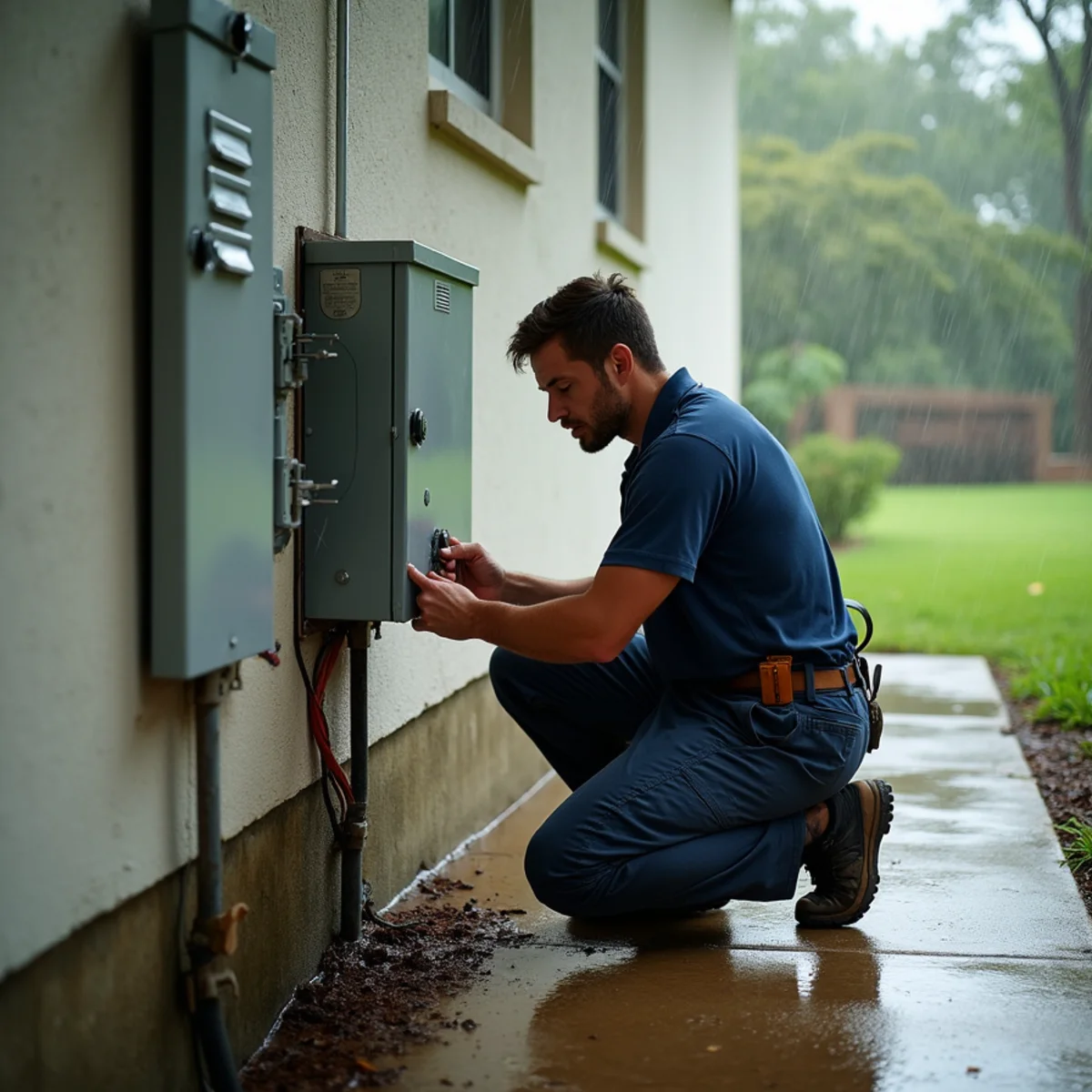
Step 1: Protect Electrical Panels and Foundation Weep Screeds
The moment floodwaters rise above lawn grades in St. Cloud or Osceola County, your first priority is life safety. Turn off exterior breaker circuits servicing outdoor landscape lighting, patio outlets, and pool pumps if water approaches their junction boxes. Next, inspect your home's perimeter foundation weep screeds and sliding glass door tracks. If water rises within 2 inches of sliding door thresholds, immediate sandbagging and physical water diversion are mandatory to stop costly interior flooring damage.
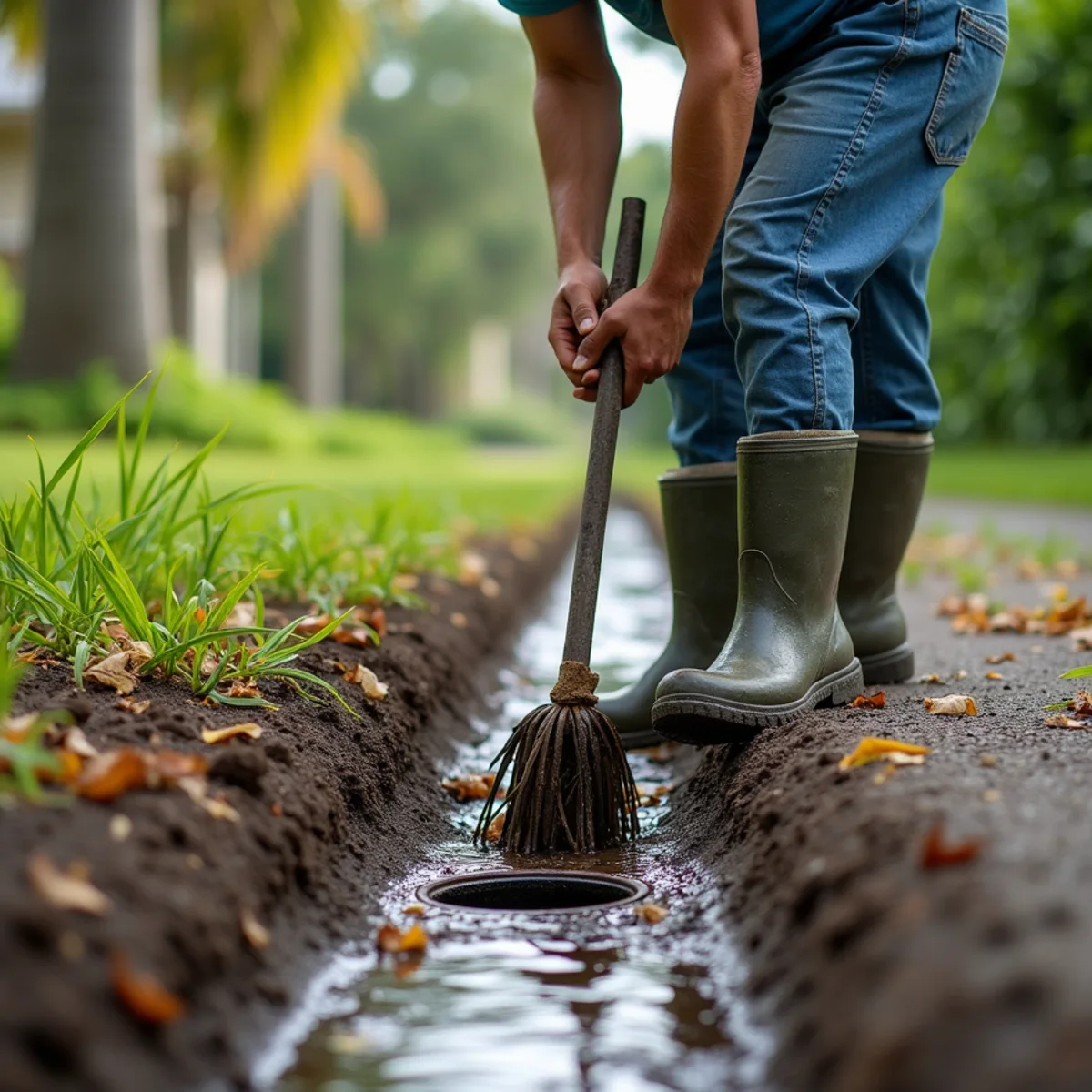
Step 2: Clear Clogged Swales and Stormwater Outlets
Most Florida residential subdivisions are engineered around shallow roadside swales and retention canals. During high wind events, palm fronds, Spanish moss, and tree limbs frequently wash into drainage grates, creating artificial dams. Wearing heavy gloves and protective boots, check your property's perimeter drainage swales and clear accumulated debris to allow gravity to start working in your favor.
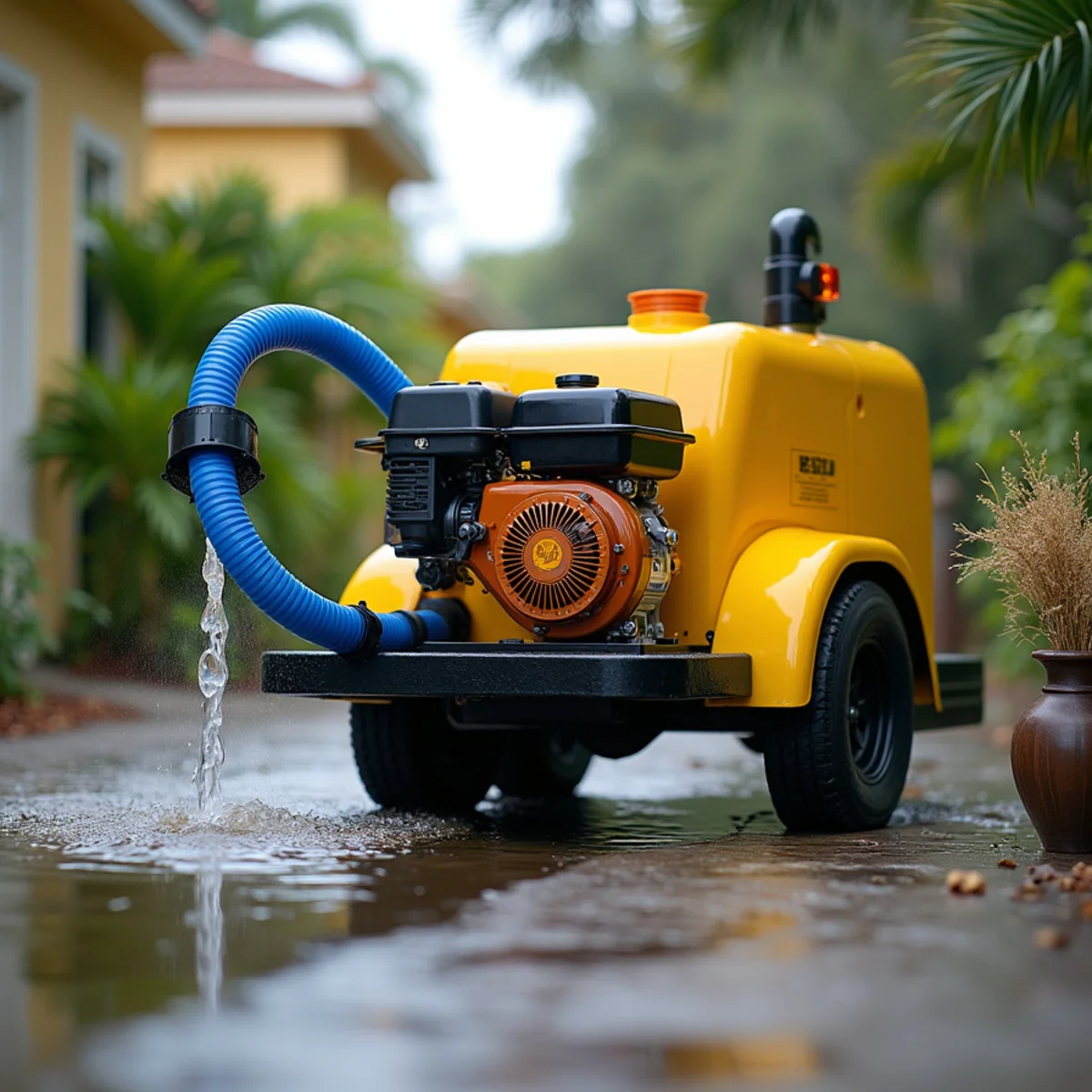
Step 3: Deploy Emergency Pumping Equipment
When stormwater cannot gravity-drain because the local water table is completely saturated, mechanical pumping is required. Commercial gasoline trash pumps discharging through 3-inch hoses can move hundreds of gallons per minute away from foundation walls to approved street storm sewers. Stagnant floodwater left standing for more than 48 hours will suffocate St. Augustine turf roots and breed aggressive mosquito swarms.
Step 4: Transition to Permanent French Drain Engineering
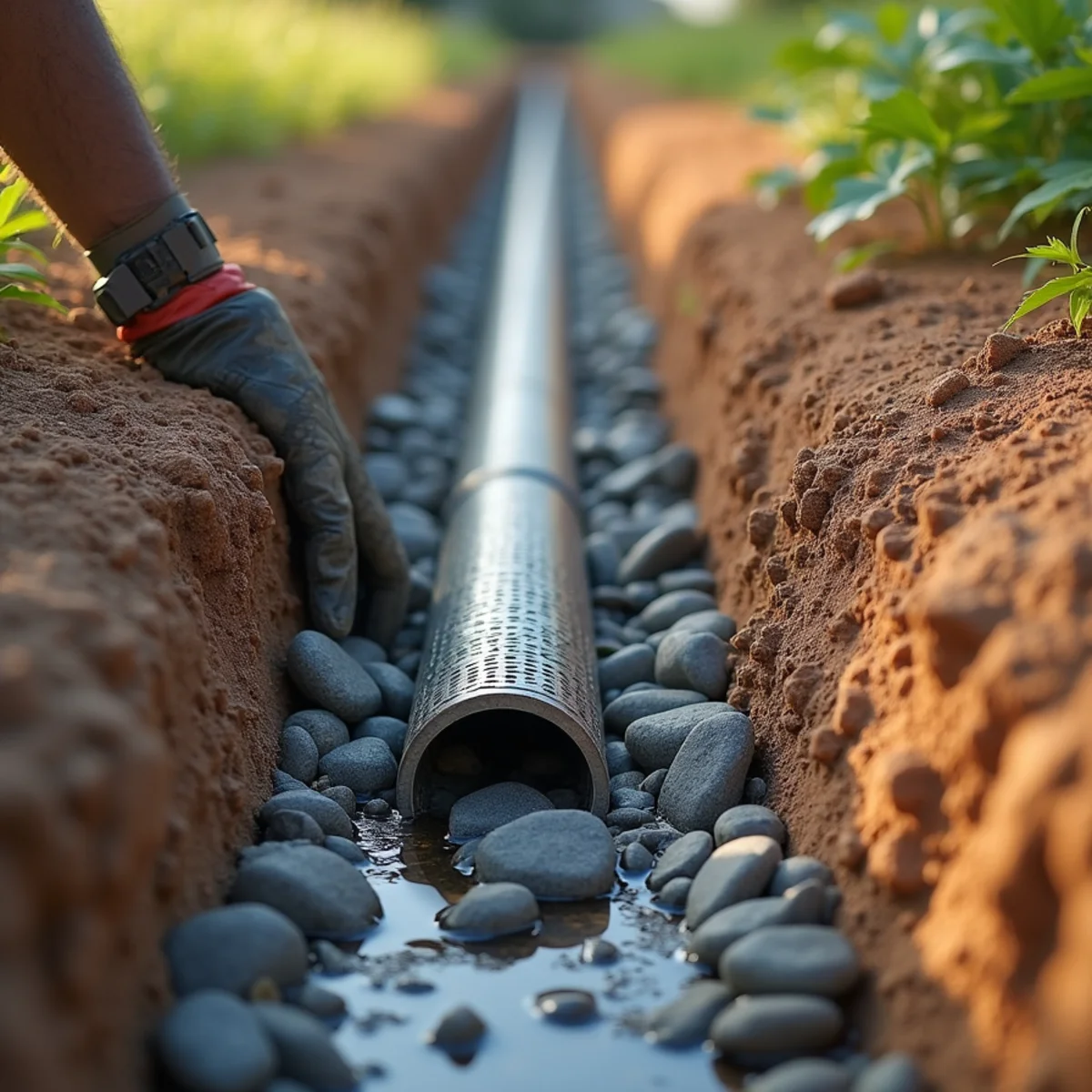
Once the storm emergency passes and the yard dries, inspect the waterlines left on fences and foundation walls. A chronic yard flood indicates sub-surface hardpan clay or inadequate positive grading. Installing commercial gravel-encapsulated French drains, catch basins, and laser-graded swales guarantees your yard will evacuate torrential rain safely during the next storm.
Technical Reference & Specifications
Florida Landscape & Hardscape Decision Matrix
Evaluate critical engineering, soil, and horticultural parameters when undertaking outdoor landscape improvements across Osceola and Orange County.
Core Variable
Florida Condition
Contractor Standard
Risk of Neglect
Subgrade Soil
Entisols (Sugar Sand) & Clay Pockets
Geotextile fabric + 6" crushed DOT concrete base
Severe paver rutting & subgrade washout
Storm Evacuation
Up to 4" rain per hour in summer squalls
Laser-graded French drains + pop-up discharge emitters
Foundation weeping & sod root asphyxiation
Wind Resistance
Category 1 to 5 Hurricane gusts (75–155+ mph)
Structural palm tie-backs + deep-root anchoring
Canopy shearing & property structural strikes
HOA & City Code
Architectural Review Board (ARB) submittals
Stamped 3D CAD plans + Florida-Friendly plant keys
Stop-work orders & recurring HOA violation fines
Contractor Field Notes & Expert Insights
Master Landscaper Field Perspective (St. Cloud, FL)
Over two decades of designing and installing hardscapes and plantings throughout Central Florida, our lead project managers routinely encounter projects that failed prematurely due to common contractor shortcuts. In Florida's unique climate, three critical practices determine long-term success:
1
Never skip geotextile underlayment: In Florida sugar sand, fine subgrade particles migrate into aggregate base layers over time without non-woven geotextile separation, leading to uneven settling and trip hazards.
2
Verify positive slope away from foundation: Always maintain a minimum 2% grade slope (1/4 inch per foot) away from the house slab for the first 10 feet. Saturated soil along stem walls voids pest warranties and cracks exterior stucco.
3
Match plant root volume to Florida soil moisture: Tropical specimens planted in poorly drained retention pockets develop phytophthora root rot. 3D master planning allows soil elevation matching before planting a single shrub.
Connected Florida Services
Professional Landscape & Hardscape Solutions
Explore professional design and installation services directly related to this topic:
The horticulturists, landscape architects, and drainage engineers at YourVision 3D landscape design in St. Cloud, FL. Grounded in UF/IFAS Florida-Friendly principles and DBPR commercial landscape contractor standards.
Got Questions? We Have Answers
Key Questions Answered
St. Augustine grass can survive 24 to 48 hours submerged. Beyond 48 hours in hot Florida sunshine, root rot and scald set in rapidly, requiring full sod replacement.