Local-Specific Angles2025-10-206 min readYourVision 3D Horticultural Staff
Protecting Central Florida Tropicals from Occasional Winter Freezes and Cold Snaps
Central Florida winters are mostly warm, but 1 or 2 hard cold snaps (below 32°F) can devastate exotic palms and tropical hibiscus. Learn how to protect your investment.
Direct Answer & Florida Contractor Takeaway
The Fast Answer for Central Florida Property Owners
Direct Summary: In Central Florida's humid subtropical climate (USDA Hardiness Zone 9b/10a), effective landscape longevity, storm resiliency, and property value protection demand proactive horticultural planning, precision grading, and moisture management. Whether remediating torrential stormwater, selecting Florida-Friendly turf, or installing architectural pavers over sandy scrub, solutions must comply with local Osceola and Orange County building codes and UF/IFAS guidelines to prevent costly rework.
UF/IFAS Florida-Friendly principles verified
DBPR licensed & insured installation standards
Osceola & Orange County HOA code compliance
Engineered for hurricane-season wind and deluges
In This Architectural Guide
1.Knowing the Temperature Thresholds (Zone 9B vs. 10A)
2.Deep Watering the Afternoon Before a Freeze
3.Proper Frost Cloth Technique (Never Use Plastic Directly)
4.Post-Freeze Pruning Patience
Knowing the Temperature Thresholds (Zone 9B vs. 10A)
Most of St. Cloud and Orlando sits in USDA Hardiness Zone 9B/10A. Tropical plants like Crotons, Bougainvillea, Areca palms, and Christmas palms suffer leaf burn when temperatures drop below 38°F and severe crown damage below 30°F. Native species like Sabal palms and Coontie tolerate freezing effortlessly.
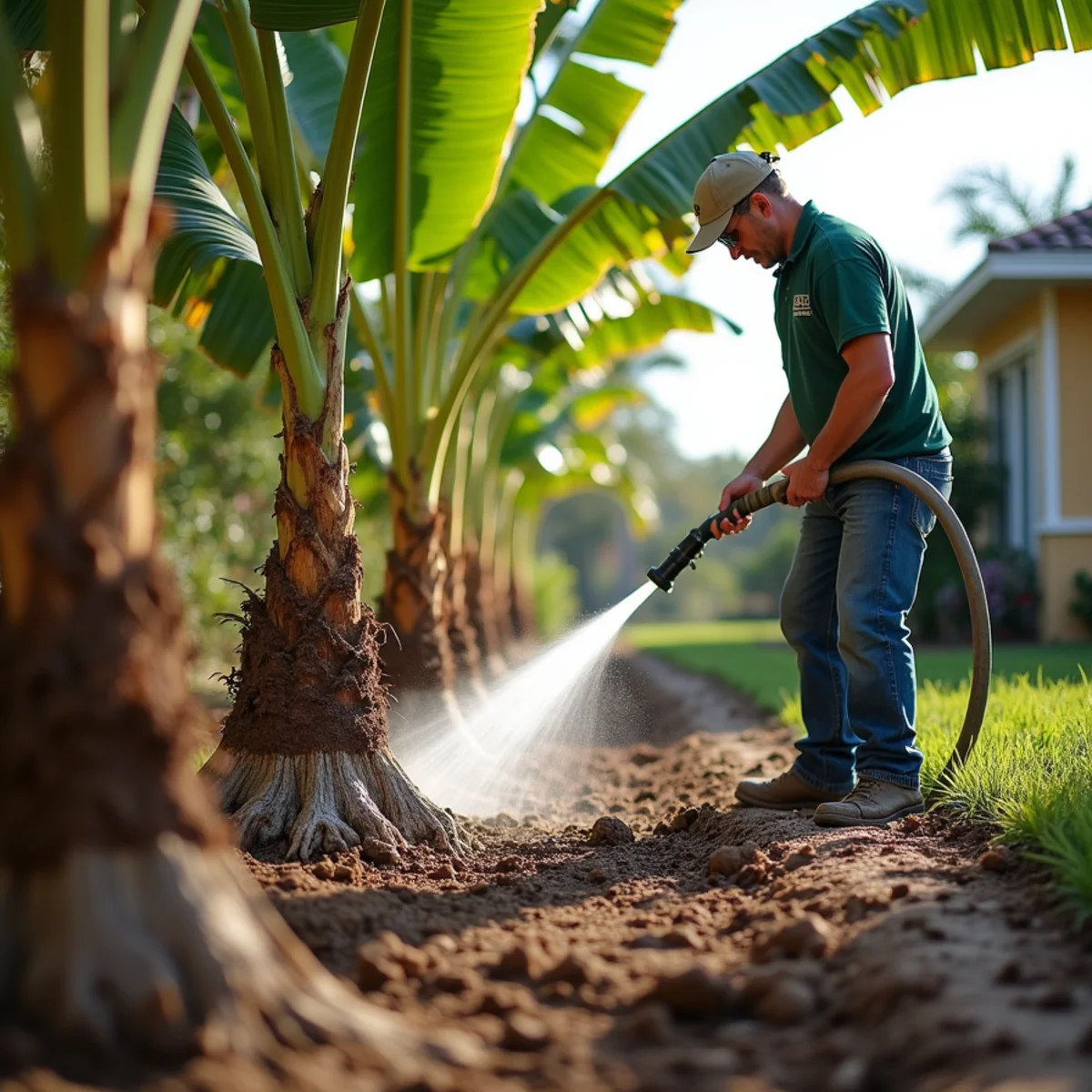
Deep Watering the Afternoon Before a Freeze
Counterintuitively, wet soil retains more thermal heat than dry sand. Thoroughly soaking your landscape beds 12 to 24 hours before a forecast freeze allows the moist soil to absorb daytime solar heat and radiate warmth upward into plant canopies through the night.
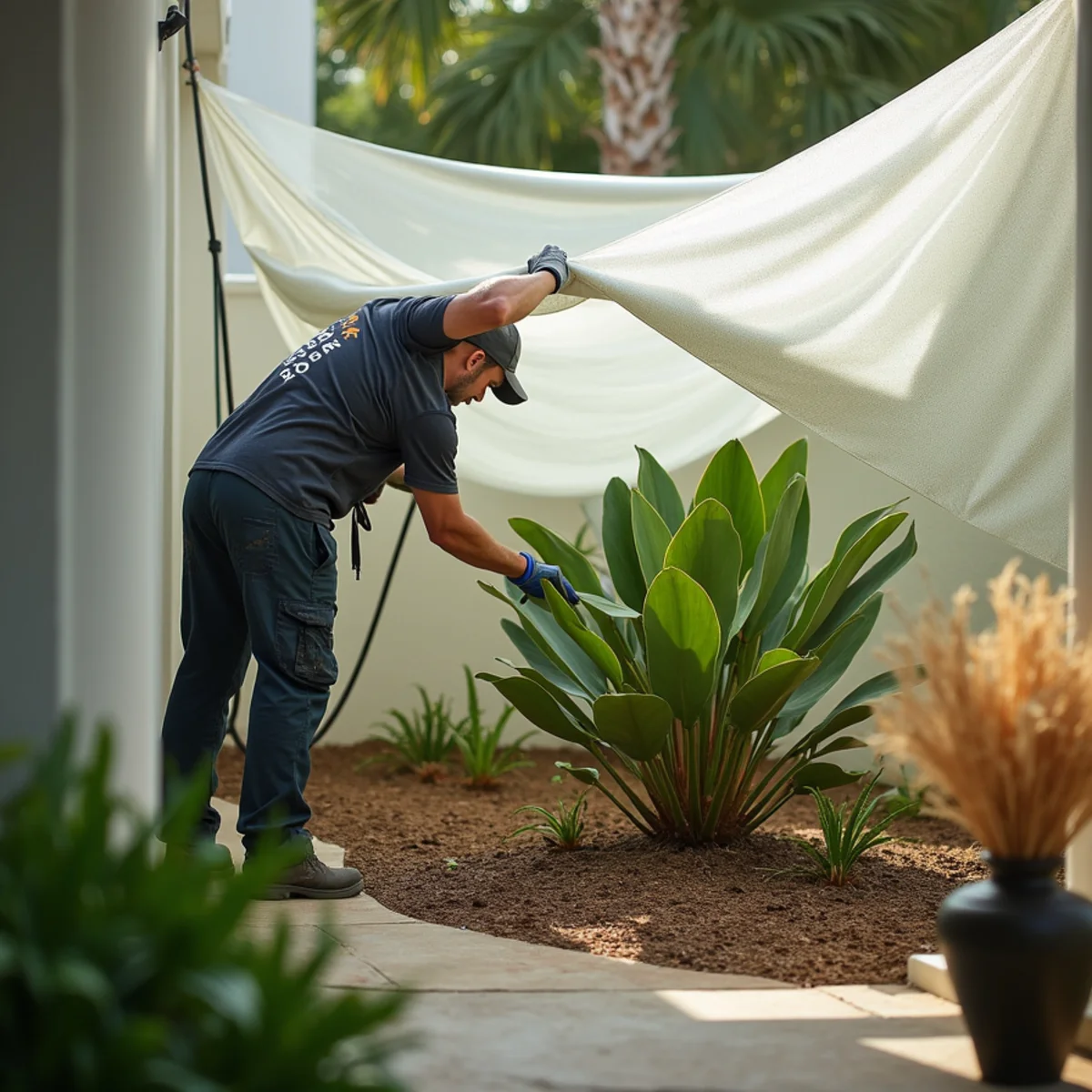
Proper Frost Cloth Technique (Never Use Plastic Directly)
Cover tender tropicals with breathable agricultural frost cloth or cotton sheets staked all the way down to the ground to trap radiant soil warmth. Never drape clear plastic directly onto foliage; plastic conducts cold and burns leaves upon contact with freezing air.
Post-Freeze Pruning Patience
Resist the urge to prune brown, frost-burned leaves immediately after a cold snap. Dead foliage acts as natural insulation against secondary cold events. Wait until new green growth emerges in late February before performing seasonal pruning.
Technical Reference & Specifications
Florida Landscape & Hardscape Decision Matrix
Evaluate critical engineering, soil, and horticultural parameters when undertaking outdoor landscape improvements across Osceola and Orange County.
Core Variable
Florida Condition
Contractor Standard
Risk of Neglect
Subgrade Soil
Entisols (Sugar Sand) & Clay Pockets
Geotextile fabric + 6" crushed DOT concrete base
Severe paver rutting & subgrade washout
Storm Evacuation
Up to 4" rain per hour in summer squalls
Laser-graded French drains + pop-up discharge emitters
Foundation weeping & sod root asphyxiation
Wind Resistance
Category 1 to 5 Hurricane gusts (75–155+ mph)
Structural palm tie-backs + deep-root anchoring
Canopy shearing & property structural strikes
HOA & City Code
Architectural Review Board (ARB) submittals
Stamped 3D CAD plans + Florida-Friendly plant keys
Stop-work orders & recurring HOA violation fines
Contractor Field Notes & Expert Insights
Master Landscaper Field Perspective (St. Cloud, FL)
Over two decades of designing and installing hardscapes and plantings throughout Central Florida, our lead project managers routinely encounter projects that failed prematurely due to common contractor shortcuts. In Florida's unique climate, three critical practices determine long-term success:
1
Never skip geotextile underlayment: In Florida sugar sand, fine subgrade particles migrate into aggregate base layers over time without non-woven geotextile separation, leading to uneven settling and trip hazards.
2
Verify positive slope away from foundation: Always maintain a minimum 2% grade slope (1/4 inch per foot) away from the house slab for the first 10 feet. Saturated soil along stem walls voids pest warranties and cracks exterior stucco.
3
Match plant root volume to Florida soil moisture: Tropical specimens planted in poorly drained retention pockets develop phytophthora root rot. 3D master planning allows soil elevation matching before planting a single shrub.
Connected Florida Services
Professional Landscape & Hardscape Solutions
Explore professional design and installation services directly related to this topic:
The horticulturists, landscape architects, and drainage engineers at YourVision 3D landscape design in St. Cloud, FL. Grounded in UF/IFAS Florida-Friendly principles and DBPR commercial landscape contractor standards.
Got Questions? We Have Answers
Key Questions Answered
Christmas palms are true tropicals that can suffer damage in cold inland St. Cloud winters. We recommend planting them in microclimates near south-facing brick walls or opting for cold-hardier alternatives like European Fan Palms.